Notes from the field

What GRM Looks Like to our Longest Serving Local Staff Member in the Mexico Team

by Benito Zambrano.

For me, it has been a great experience and whole-hearted pleasure to be able to help people in need in Reynosa, Tamaulipas.  This time, I saw many people from Haiti who were on their journey to the United States.  I have seen the suffering, crying, and pain suffered by each of them and their families.  But at the same time, I witnessed their strength, the way that they tolerate awful conditions that life has thrown at them, which are even worse during this cold time of year.  I see them living in their tents, without bathrooms or kitchens as they stay focussed on their destination of being granted asylum.

I recently was working in Senda de Vida, where I saw various migrants from countries such as Haiti, Russia, Honduras and El Salvador to name just a few, all coming together to help each other and going about their days, quietly and calmly, as if the various conflicts in their home countries did not exist.  It meant a lot to me to see them in that way.

Every day, GRM’s volunteers, together with local doctors from Reynosa, showed strength and determination to give the best possible care, treating the patients with love, integrity, concern, giving each one the care and time needed to treat them.

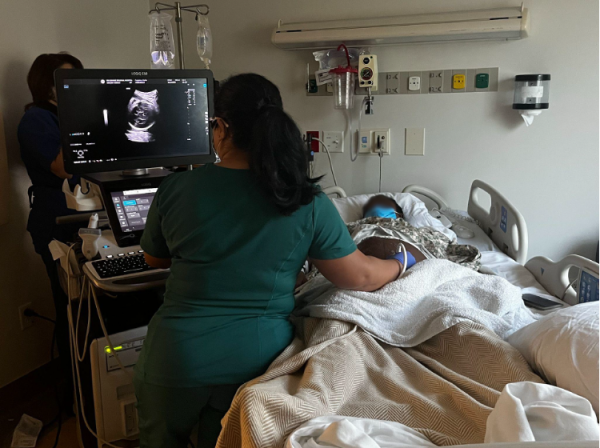
I worked with a volunteer doctor called Matt as he attended to a high-risk, pregnant patient.  The team came together to immediately identify her needs and work to give her the best possible help that they could.

At the same time, the local doctors were taking part in an ultrasound course which I helped to translate, over the course of a few days.  They worked with a boundless desire to learn, reviewing the pregnant patients and providing such joy when the patients found out the sex of their baby and that the pregnancy was going well.

I have always appreciated the efforts that GRM’s volunteers make to leave their homes to come and help all kinds of patients from those who only need a painkiller for a headache to those whose lives are in danger.  This service and dedication of each of them is amazing.

I am not sharing much of the work that GRM does, but I am totally convinced in my heart and mind that what GRM has done and continues to do is marvelous and they are helping those who are in need.

On a personal note, I am so proud to be part of GRM because it has given me the opportunity to be able to help a little and to be able to smile.

About Benny:
Benny is one of our longest serving members of the team in Mexico, having served for 2.5 years.  He was born in Matamoros, Tamaulipas in Mexico.  He is the second youngest in his family of 10.

SPANISH VERSION

Mi nombre es Benito Zambrano,me gustaría compartir la experiencia que tuve las semanas pasadas que estuve en Reynosa.

Para mí fue una gran experiencia y un placer de todo corazón lo digo de poder ayudar a las personas en necesidad.  Está vez que estuve allá miré muchos migrantes de Haití que van en su travesía rumbo a los Estados Unidos.

He visto el sufrimiento, llanto , y dolor que sufre cada uno de ellos y sus familias, he visto de la misma la manera como sacan fuerza y soportan las condiciones de vida que están pasando,en este tiempo con frío, condiciones de vivienda en carpas, sin baños,si tener donde cocinar y todos con el enfoque de llegar a su destino.

Me tocó estar un día en Senda de vida,me tocó ver migrantes de varios países como Haiti, Rusia, Honduras,El Salvador entre muchos más, todos con un mismo pensamiento, ayudándose entre sí, no importando los conflictos que tienen los que están en el poder, cada uno de ellos mirándose como seres humanos y platicando tranquilamente. Me gusto mucho ver eso en cada uno de ellos.

El equipo de voluntarios que estuvieron estás semanas en Reynosa tantos ellos como el equipo local de doctores, cada uno de ellos esforzándose cada día más y mejor para dar la atención lo mejor posible, tratando a pacientes con amor, integridad, preocupación, dándole el tiempo al paciente y profesionalismo por cada uno de los pacientes en necesidad.

Tuve la experiencia de estar presente cuando el Doctor Matt atendió a una paciente embarazada con mucho riesgo, inmediatamente identificó la necesidad y tanto él como el equipo hicieron lo posible para brindarle lo necesario y ayudarla lo cual se pudo lograr.

Los doctores locales esta vez estuvieron en un curso de ultrasonido y me tocó estar con ellos un par de días y como siempre con la mejor disposición de aprender cada día más, estuvieron revisando pacientes embarazadas y mire la alergia en ellas cuando les decían que sexo es el bebé y que el embarazo estaba bien.

Me ha llamado siempre la atención el esfuerzo de cada uno de los voluntarios de dejar sus comodidades para venir ayudar a un paciente que quizá solo necesita una pastilla para dolor de cabeza hasta para un paciente que está en riesgo su vida. Esa entrega y dedicación de cada uno de ellos es asombrosa.

No es mucho lo que comparto pero sí estoy convencido en mi mente y corazón lo que ha hecho y sigue está maravillosa organización Grm para ayudar aquellos en necesidad, mostrando el anhelo y preocupación para el necesitado.

En lo personal me enorgullece ser parte de Grm porque me da la oportunidad para poder ayudar un poco y poder lograr una sonrisa.

Benito Zambrano ha estado en nuestro equipo en México durante 2 años y medio.  Nació en la ciudad de Matamoros Tamaulipas México, soy el segundo menor de una familia de 10, también predicó la palabra de Dios.
Newsletter

April 2023 Newsletter – GRM at SDSU “Race and the Borderlands” Conference

This month, the GRM team was invited to present at the binational conference “Race and the Borderlands” hosted by San Diego State University. This conference brings together scholars, practitioners, student organizations, and grassroots movements to collectively consider issues of human rights and racialization in the borderlands. The conference focuses on scholarly collaboration, community building, and the movement of ideas and people in the region. “Race and the Borderlands” offers an opportunity to convene key organizations and thinkers, integrate frameworks for collective action, and launch new collaborations.

Brendon Tucker, GRM’s Reynosa Project Manager, is presenting the “Health Interventions: A Novel Collaboration to Support the Health of Children Asylum Seekers” Panel, alongside Felicia Rangel Samponaro (co-director, Sidewalk School), Victor Cavazos (co-director, Sidewalk School), and Dr. Jyothi Marbin. Brendon will discuss the medical needs of asylum seekers in Reynosa, the safety challenges faced by the GRM medical team and asylum seekers themselves, and the collaboration and partnership between GRM and the Sidewalk School. We’re so proud of Tucker for representing GRM on the academic stage and speaking out about the continued dire need for medical care on the U.S. / Mexico border!

For this month’s newsletter, we want to take the opportunity to raise awareness about a critical issue affecting millions of people worldwide – global borders and the hardships that displaced people face when crossing them.

By the end of 2021, 89.3 million people worldwide were forcibly displaced due to conflict, disaster, violence, persecution, and human rights violations. This staggering number represents the highest level of displacement on record, and it is a humanitarian crisis that demands our attention. Forced migration is fraught with danger, and often means going without consistent and safe shelter, food, water, or medical attention for months or even years at a time. For many, displacement means serious injury, or even death. According to the UNHCR, the number of forcibly displaced or stateless people is expected to increase to 117.2 million in 2023. This problem is not going away anytime soon, and it’s up to us to act.

We must continue to work together to create a world where everyone has the right to health, wellness, and medical care access, regardless of their background, race, religion, or nationality. The Global Response Medicine team believes that health care is a human right, and we stand in solidarity with displaced communities around the world.

We urge you to join us in supporting their cause. To make a meaningful impact and support those in need, please consider visiting our website and making a donation today. Every contribution, no matter how big or small, will help provide vital medical assistance to displaced people, in the borderlands, and across the globe. Your donation can make a real difference in someone’s life.

You can also help further the GRM mission by starting a Facebook fundraiser in GRM’s honor, setting up a recurring donation, or spreading the word by sharing our social media posts on Facebook and Instagram.

Newsletter

March 2023 Newsletter – Tapachula Clinic Closure

When GRM opened our Tapachula Clinic in 2021, an estimated 60,000 people were stranded in Southern Mexico waiting for permission to either resettle or move through the country. Working with local partners and NGOs, Team Tapachula quickly became a major provider of care for those living in the shadows. The need hasn’t disappeared, but support for refugee aid in the region has sharply decreased.

As such, GRM made the difficult decision to end our Tapachula clinical program. In just 22 months, Team Tapachula treated over 22,000 people in limbo at the border of Mexico and Guatemala, both in our stationary clinic, through mobile clinics, and by responding to crises.

Here are some of the major highlights of Team Tapachula’s work since it began in 2021:

  • 5,751 migratory caravan patients treated.
  • 3,000 patients treated at El Estadio Olímpico de Tapachula.
  • 13,691 clinic patient consults.
  • 1,770 OB/GYN patient consults.
  • 293 specialty referrals for medically complex cases.

We are immensely proud of and grateful to everyone who has been a part of our Tapachula family and contributed to changing the lives of more than 22,000 patients over the last 22 months.  This extraordinary work could not have happened without the efforts of Team Tapachula – Project Manager Laura Bonitez, Dr. Gabriela Ramos, Dr. Dielly Gonzalez, Dr. Gerardo Josue Cabrera Becerril, RN Nancy Escalate, and RN Zabdi Alonso. We would also like to recognize the work of other partners who continue to provide support and resources in the area – JSR (Servicio Jesuita Para Refugiados), Una Mano Amiga en la lucha contra el SIDA A.C., Save the Children, Médicos del Mundo, Médecins Sans Frontières, OIM, ACNUR, and the Tapachula City Government.

Although our Tapachula Clinic is now closed, our work around the world is still very much necessary and ongoing. You can help continue the GRM mission by starting a Facebook fundraiser in GRM’s honor, setting up a recurring donation, or spreading the word by sharing our social media posts on Facebook and Instagram.

Newsletter

March 2023 Newsletter – The Ripple Effect

What began as two men wanting to serve others in January 2017 when GRM was founded, turned into helping over 150,000 people around the world. It’s difficult to measure the ultimate impact of helping one person. But studies show that performing an act of kindness inspires the person being helped to continue those acts with kindness other people. A ripple effect has been created that can never be stopped.

We can measure the impact that both Pete Reed and Derek Coleman had after they founded GRM back in January 2017. And while it may be impossible to measure the impact that those 150,000 people who have been served by GRM, we know that the world is a better place as a result. That ripple continues to expand and grow and we are forever grateful.

These are just a few of the many projects GRM has led since its inception:

  • 2017: 10,000 patients, 200 medics trained in Mosul, Iraq.
  • 2019: Medical Humanitarian Assessment for 20,000 people displaced in Yemen.
  • 2019 – Present: 50,000 patient contacts in Mexico.
  • 2021: 2,000 Afghan evacuees receiving medical aid in Philadelphia, USA.
  • 2021: 200 patients plus teaching for 35 nurses and clinicians in Sierra Leone.
  • 2022: 724 surgeries, 79 medevac transports, 1,800 clinicians trained, $350K in equip donated in Ukraine.

You can keep this ripple effect momentum going by starting a Facebook fundraiser in GRM’s honor, setting up a recurring donation, or spreading the word by sharing our social media posts on Facebook and Instagram!

Press Releases

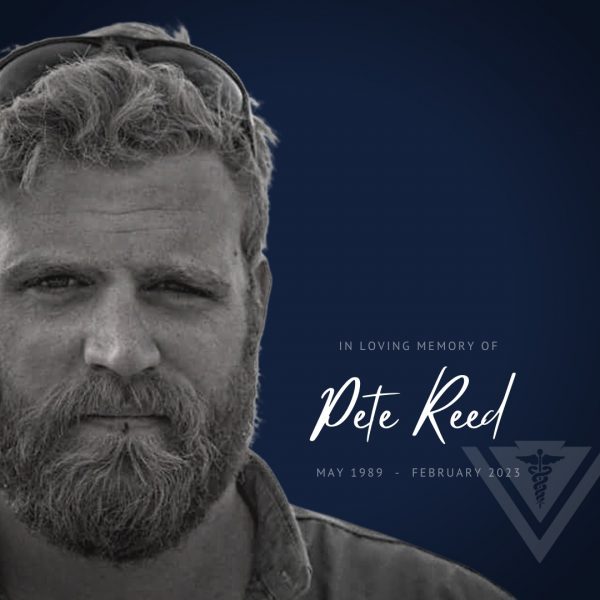
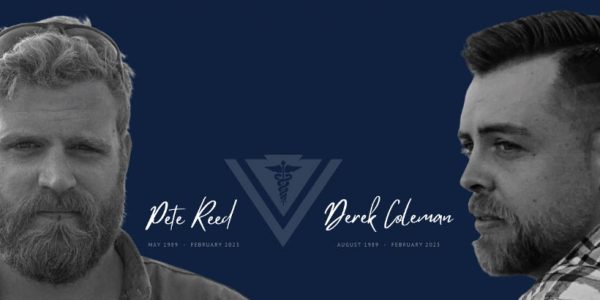
GRM Mourns Loss of Founders – Pete Reed and Derek Coleman

“I alone cannot change the world, but I can cast a stone across the waters to create many ripples.”
– Mother Teresa

In the span of one week, GRM lost both its founders – Pete Reed and Derek Coleman. Pete’s death was widely reported on after his rescue vehicle was targeted by a Russian anti-tank missile in Bakhmut. Derek’s death was quiet, a few days later, complications of chemotherapy three months after being diagnosed with lymphoma. Both were just thirty-three years old.

What these men accomplished is more than most of us do in a lifetime. Pete served his country and both served their communities. They started an organization in the middle of a war zone to help civilian victims of conflict. They directly treated thousands of people. They trained hundreds of others in trauma care who went on to care for thousands more. The organization they started has now grown to touch more than 150K lives over the last 6 years. Both were just thirty-three years old.

GRM is committed to honoring the mission Derek and Pete started. As part of that, we are working with their families on legacy initiatives. Even so, it will be near impossible to surpass what they themselves did. 150,000+ lives.

Both were just thirty-three years old.


~Statement from Alex Potter, Pete’s wife~

Pete and I met on my birthday in November 2016, soon after I’d arrived in Iraq to photograph the Battle for Mosul. Wanting to put my nursing skills to use, I messaged him and he welcomed me to the GRM team. Figured I’d stay around for a couple weeks – but we fell in love almost immediately, and became each other’s right-hand-person. I loved the way he forcefully advocated for wounded civilians, the tight bonds he made with the Iraqi medics, and his magnetic personality – his ability to connect with and love literally everyone he came into contact with. We spent the next years adventuring together – across the world and back in the states. We were fierce supporters of each other’s hopes and dreams. Whenever I had doubts or worries – about life, plans, the future – from major to the most mundane, Pete would say something like “I’m right here dummy, everything is going to be okay.”

I have never met someone more selfless. Everything he did was always for the benefit of others. He was always charming, often loud, and sometimes brash, but he got shit done for those he loved, and he loved everyone in his incredibly wide circle. That big personality overlaid the fact that he was also incredibly sensitive, loving, and brave in all aspects of the word, someone who carried me and others through incredibly hard times, placing others’ needs above his own. He was passionate about his family, Marine Corps family, Camp Beckett family, and so many others I can’t name. I can’t imagine our lives without him. I loved him so much, and he loved me so well.

Pete Reed, 9 July 1989 to 2 February 2023, was from Bordentown, NJ. He is survived by his wife, Alex Potter, mother, Candy Reed, brother, Chandler Reed and his wife Bryanne and their children Anthony, Mackenzie, and Parker, his stepmother Michelle Reed, and stepsisters Courtney Reed and Danielle Newman and her husband Gary. Pete founded GRM in early 2017 in response to the Battle for Mosul, served as an infantryman in the Marine Corps in Third Battalion, Eighth Marines from 2007-2011. He proudly graduated from Paramedic school in June 2022.


~Statement from Derek Coleman’s family~

Derek Coleman was genuine in every aspect, sometimes to a fault. He would often tell you exactly how he felt not realizing if it was not what you were expecting to hear. He didn’t do it to be rude, he was just being honest. This was tough at times but you could always trust that Derek was saying how he really felt. He was not shy to share his opinions on politics, historical events, video games, movies, board games, or just about anything. He would listen to what you had to say and calmly ask you a question that would gently challenge your viewpoint. His vast knowledge on such a broad range of topics was never lost on those he encountered. He could quote a line from a movie and in the next sentence quote Friedrich Nietzsche.

Derek had an amazing smile and a wicked sense of humor. He had the ability to be both serious, while adding in his quick-witted jokes that could add levity to a dark situation. Derek made a lasting impact on everyone he met; his connections span the globe. We were always so proud of how he was able to keep those connections alive despite the distance. Derek was loved deeply, and he loved deeply. We will miss him every day but we are so thankful to have had him for the 33 years we did. He may not be with us today, but his legacy will live on forever. Rest easy Derek, you’ve done enough.

Notes from the field

When the Medicine Runs Out: Working with the Burns Victims in Sierra Leone in 2021

by Mark McDonald

WARNING! THIS POST CONTAINS GRAPHIC IMAGES.

*Please note, names have been changed to protect our patient’s identity

On the western coast of Sierra Leone, near Tagrin Bay, one of the most photogenic landscapes I have ever seen, Sierra Leone’s capital, Freetown, bustles with the sounds of Okada motorbikes speeding down streets, honking vehicles rushing to climb the city’s steep inclines.  Friends yell, laugh, and share joy. But on the morning of November 6th, 2021 the city fell silent as the devastation of the night before gripped the city in its unforgiving jaws of reality.  

A tanker full of petrol – struck by a large truck – was leaking onto the city streets. Seizing the opportunity of free fuel, onlookers started to gather as much petrol as possible. Others, some watching the chaos unfold, some stuck in the traffic backed up from the collision, suddenly became victims of one of the country’s largest tragedies. 

Nearly 100 bodies lay charred, exposed, and lifeless on this, now sombre, city street. Approximately 200 others were rushed to receive immediate burn care at Freetown’s, now exceedingly overwhelmed, hospitals. Spread over more than 5 hospitals, as both in and out-patients, Sierra Leone’s healthcare system had to manage the impossible. 

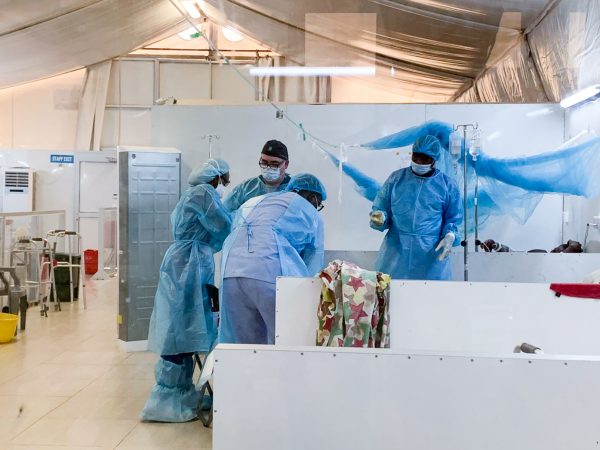
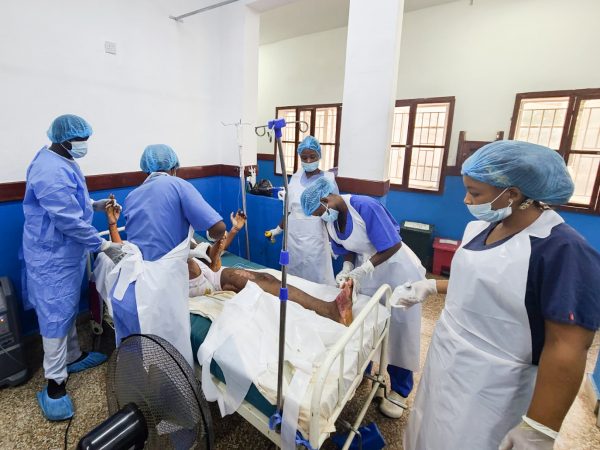
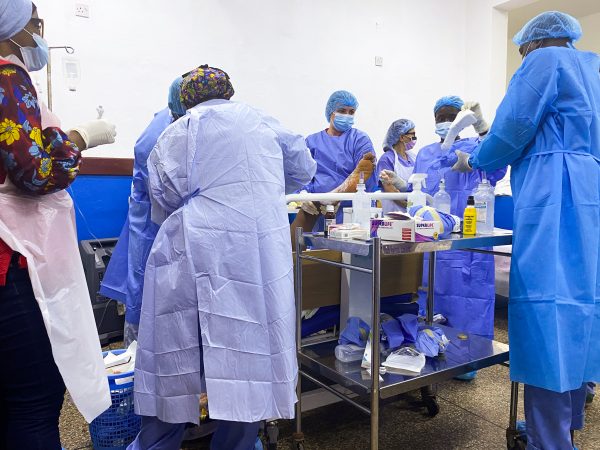
I arrived in Sierra Leone two weeks after the accident as part of Global Response Medicine’s team, comprised of a burn surgeon, several burn nurses, critical care providers, and administrative staff.  We worked to help the local hospitals, still overrun by critical burn patients, navigate their treatment and management – many of whom now fiercely aware of a third cause of burn deaths – infection.  

While the details of the patients and their conditions can be more eloquently shared by those who provided “hands-on” patient care, the logistics of the situation were heavy on my shoulders. This is an excerpt of my writings in real time, both from notes and reflective journaling while in Freetown:

Nov. 22nd

  • Burn care and dressing changes started at appx. 11 a.m.. Screams from suffering patients are almost unbearable. For hours, while dressings are changed, eschar is lifted, as they plead for their turn to be over. Worked with logisticians to plan buildout of  makeshift operating room. 
  • paracetamol is the most common pain medication administered  – ketamine and other narcotics are extremely scarce  and used extremely judiciously.
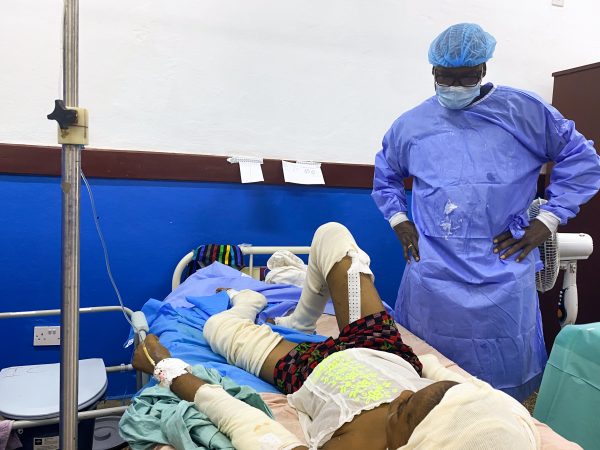
  • Female with severe leg burns are infected, combined with a lack of adequate amounts and variety of antibiotics, bilateral below-the-knee amputation is likely the only measure left for preservation of life. 

Nov 23rd: Progress is made on the idea of a standalone OR [“operating room”]. Lead physician at Military 34 Hospital approves tour of OR for our team to get an idea of what supplies they can help provide.  Staff warns us: “it’s not much”. 

Nov 23rd: GRM meets with team at public local hospital. There is a male patient who has opted out of further care, wounds are so infected and dressings are dried into the wounds; patient has settled with the idea of death. 

Nov 24th: tour of OR complete. No AED/defibrillator in OR. Only a 3 lead and a disposable pulse ox probe noted on cardiac monitor. Bovie is reported to be in good working condition. Note a bucket of rust colored endotracheal tubes near scrub sink – local physician reports they are reused until they can no longer be reused as supply of such material is very short (shortage is not unique to the burn incident). 

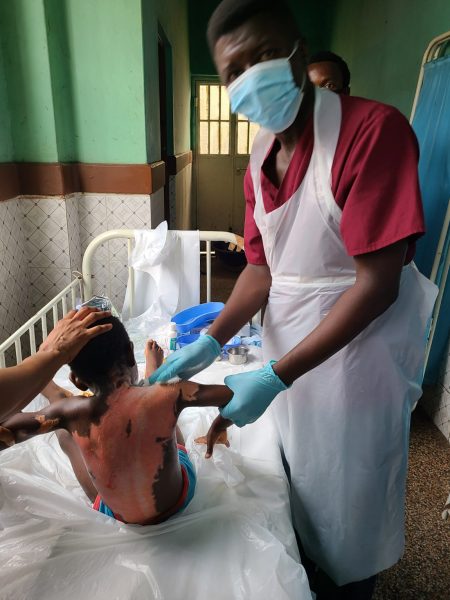
Personal diary entry at end of Nov 27th: Today we cared for an adolescent female who had over 80% 3rd degree burns. How she is alive still, I will never know. Most of her extremities are exposed muscle. She continues to blink and cry as we change her dressings; there isn’t enough ketamine available to make her more comfortable. When we are done, she is wrapped in burn dressings, literally from head to toe. Speaking of, several of her toes have been lost due to infection/necrosis. I have honestly never seen anything so devastating. I remain inspired by her will to live, her perseverance, and her faith in her providers. 

Nov 29th: Young female passed away.

When the world seems overwhelming:

Overlooking the bright lights of Paris on a red-eye, midnight flight, I remain exhausted and emotionally taxed from my experience. I am headed back to my primary project in Matamoros, Mexico, where for the last year I have been fussing about the incredible lack of resources we have access to in order to treat our patients. As I watch the lights of Paris escape behind the wing of the plane, I realize I would give anything to have brought the short supply of resources from Mexico with me to Sierra Leone. Would it have made much of a difference? I guess we will never know, but science makes me believe the answer is a resounding YES. 

As a man who has never been accused of being under-sensitive, I think back to the lesson that has helped me manage the rollercoaster of emotions and feelings that a life in healthcare has presented; I didn’t cause tragedy and my only responsibility is to do my part to make it better. And then I repeat what I recite every morning; “Do not be daunted by the enormity of the world’s grief. Do justly now, love mercy now, walk humbly now. You are not obligated to complete the work, but neither are you free to abandon it.” (The Talmud)

So many of us in healthcare rely on that or something similar to get through. I say get through as a blanket statement; to get through our shift, to get through the week, to get through the code, the funeral, our careers. How many of us are actually taking that to heart? Do we really not carry the entire weight of the world’s grief on our shoulders? How much of what we experience are we willing to let go of in order to be healthy; not just physically but mentally. 

Is love the secret?

I wish I had the secret, but the stern reality is that I do not. In fact, I may be farthest away from having it. I do know one thing, though, and it was never more prominent than my experience in Sierra Leone:

There are many factors to the human condition. The one that tends to cure me the most, however, is the expression of love. 

I spent nearly two years in Matamoros as the project manager, and through it all, the one thing that was never lacking was love. Love for humans. Love for medicine. Love for justice and equity. Love for mercy. Love for a better tomorrow. Love for a child’s laughter. Love for a good prognosis or a successful treatment. Love for one another. 

The love that pressed on my soul as an impression of my experience in Sierra Leone made me a better project manager, a better friend, a better father, and a better human. I am immensely grateful for GRM and their ability to plug into situations where love is needed the most. Where we can go and do things no one else can do. That we have the opportunity to create more of those tiny pieces of paper that not only help cover and heal the pain of our patients, but that those metaphorical pieces of paper also begin to heal our own pain. 

 When it comes to what we need the most, I am forever grateful for what the people of Sierra Leone and Matamoros, Mexico have taught me: love heals and love wins.


BLOG POSTS ARE THE OPINION OF THE AUTHOR AND DO NOT NECESSARILY REPRESENT THE VIEW OF GRM

News Updates

GRM Mourns Loss of Founder, Pete Reed


On Feb 2nd, GRM founder Pete Reed was killed in Bakhmut, Ukraine. Pete was the bedrock of GRM, serving as Board President for 4 years. In January, Pete stepped away from GRM to work with another organization on their Ukraine mission and was killed while rendering aid.

This is a stark reminder of the perils rescue and aid workers face in conflict zones as they serve citizens caught in the crossfire. Pete was just 33 years old, but lived a life in service of others, first as a decorated US Marine and then in humanitarian aid. GRM will strive to honor his legacy and the selfless service he practiced.

We fully support Pete’s family, friends, and colleagues during this devastating time and have included a statement from his wife and GRM Board Vice President, Alex Potter, below.


Statement from Alex Potter, Pete’s wife

“Pete and I met on my birthday in November 2016, soon after I’d arrived in Iraq to photograph the Battle for Mosul. Wanting to put my nursing skills to use, I messaged him and he welcomed me to the GRM team. Figured I’d stay around for a couple weeks – but we fell in love almost immediately, and became each other’s right-hand-person. I loved the way he forcefully advocated for wounded civilians, the tight bonds he made with the Iraqi medics, and his magnetic personality – his ability to connect with and love literally everyone he came into contact with. We spent the next years adventuring together – across the world and back in the states. We were fierce supporters of each other’s hopes and dreams. Whenever I had doubts or worries – about life, plans, the future – from major to the most mundane, Pete would say something like “I’m right here dummy, everything is going to be okay.”

I have never met someone more selfless. Everything he did was always for the benefit of others. He was always charming, often loud, and sometimes brash, but he got shit done for those he loved, and he loved everyone in his incredibly wide circle. That big personality overlaid the fact that he was also incredibly sensitive, loving, and brave in all aspects of the word, someone who carried me and others through incredibly hard times, placing others’ needs above his own. He was passionate about his family, Marine Corps family, Camp Beckett family, and so many others I can’t name. I can’t imagine our lives without him. I loved him so much, and he loved me so well.

Pete Reed, 9 July 1989 to 2 February 2023, was from Bordentown, NJ. He is survived by his wife, Alex Potter, mother, Candy Reed, brother, Chandler Reed and his wife Bryanne and their children Anthony, Mackenzie, and Parker, his stepmother Michelle Reed, and stepsisters Courtney Reed and Danielle Newman and her husband Gary. Pete founded GRM in early 2017 in response to the Battle for Mosul, served as an infantryman in the Marine Corps in Third Battalion, Eighth Marines from 2007-2011. He proudly graduated from Paramedic school in June 2022.”

Media inquiries can be sent to [email protected].

Notes from the field

How I Helped a Pregnant Mum Avoid Severe Complications Whilst Volunteering in Reynosa

by Katie G., GRM Volunteer Nurse

*Please note, names have been changed to protect our patient’s identity

In November 2022, GRM met Fabienne*,  a Haitian refugee living in the Senda de Vida Shelter, who was 28 weeks pregnant and presenting with a medical condition called pre-term premature rupture of the membranes (PPROM), meaning her water broke too early. This condition is dangerous for the mother due to high risk of infection and high probability of emergency cesarean section and also for the premature baby, whose lungs are not fully developed and will need NICU care immediately after delivery.

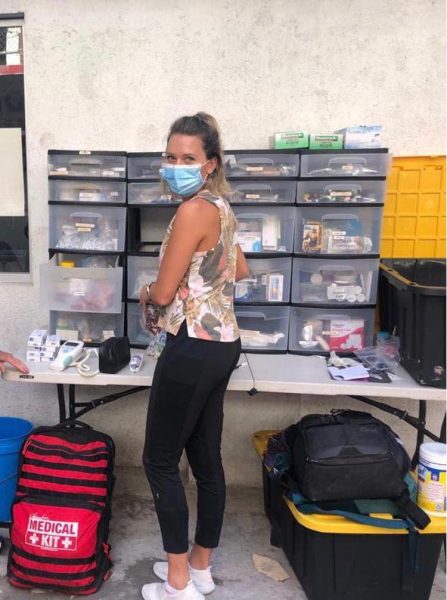
Photo: Nurse Katie, a GRM volunteer and the author of this story, setting up for clinic hours in Reynosa.

Doctors Without Borders notified GRM that this woman had been turned away from the Reynosa emergency department because they did not have NICU capacity. So I went with others to collect the patient and her family from the shelter and brought them to the clinic at Casa de Lulu.

When Dr. William, a local GRM staff doctor, contacted the maternity hospital in Reynosa, he was told that all of the NICU beds were in use and they could not accept any more patients. At this point, the GRM team agreed that Fabienne would not be able to receive the immediate care she needed in Mexico and arranged for her to be received at a U.S. hospital in Texas via our medical referral cost coverage program (a program that is facilitated through GRM’s generous donor community for urgent and complex medical cases like this).

GRM contacted Lawyers for Good Government in order to initiate medical asylum paperwork and expedite Fabienne’s crossing. In the meantime, Dr. William and Nurse Katie gave her an injection of steroids to help the baby’s lungs develop and an injection of antibiotics to prevent infection.  As soon as the legal paperwork was completed, GRM started assisting Fabienne and her family cross the border.

At this point, Fabienne was in pain, feeling contractions and leaking a significant amount of amniotic fluid. Nurse Katie used a GRM wheelchair to push the patient across the border bridge while another volunteer nurse, Lia, accompanied her family close behind. Once at the bridge, they were met by CBP agents and brought to the Immigration Center. It took about an hour to get through the Immigration Center before the patient was released and an ambulance was called. Katie accompanied Fabienne in the ambulance to the Rio Grande Hospital with Lia and the family following behind in an Uber.

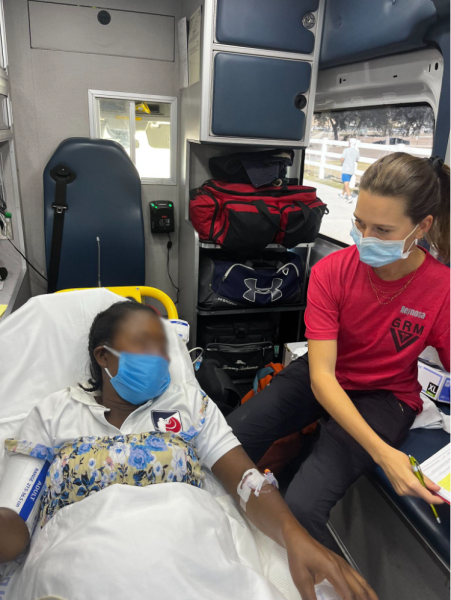
Above right: Nurse Katie and patient in U.S. Ambulance after crossing.

At the hospital, Fabienne was immediately transferred through the ER and into the Labor and Delivery Unit. The L&D staff were pleased to hear she had already received antibiotics and a steroid injection at the GRM Clinic, noting GRM’s quick thinking and fast action potentially helped the patient avoid an emergency premature c-section, and certainly helped prevent infection or worse complications.

Once Fabienne was safely settled in the L&D unit, GRM staff focused on the patient’s family. Unfortunately, the hospital would not allow the family to stay in the hospital room with the patient. However, our Reynosa Project Manager contacted our friends, the Angry Tias and Abuelas, another local nonprofit, who provided a three-day stay in a nearby hotel for the family.

Photo: Patient receiving treatment in McAllen, TX in Labor & Delivery Unit.

Our patient and her family were grateful for the medical services provided by GRM and told our staff this was the first time in months that they felt safe and optimistic about the future.

While it is terrible to think of what the outcome could have been without the intervention of the GRM team, Lawyers for Good Government, Doctors Without Borders, the Angry Tias & Abuelas, and everyone else involved in this patient’s care, this situation illustrates exactly how important our work is.

GRM is truly an organization that stands by the principles of the humanitarian imperative, they bring impartial assistance to those most in need and deserving. They are an organization I am proud to say I work with.


BLOG POSTS ARE THE OPINION OF THE AUTHOR AND DO NOT NECESSARILY REPRESENT THE VIEW OF GRM

Press Releases

Global Response Medicine Reynosa Project Update – November 2022


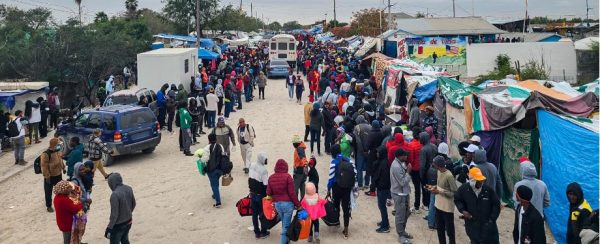
(17 November 2022, Reynosa, Tamaulipas in Mexico, several thousand people wait outside one of the main shelters, Senda de Vida. Photo credit: Brendon Tucker)

GRM REYNOSA (1 January 2022 to 31 October 2022):

REYNOSA: The Mexican Town that Acts as a Barometer for World Politics

The number of people arriving in Reynosa continues to outstrip those being allowed into the United States, causing the migrant population to grow. As a result, our outreach team is working hard to publicize our clinics and emergency services among new arrivals.

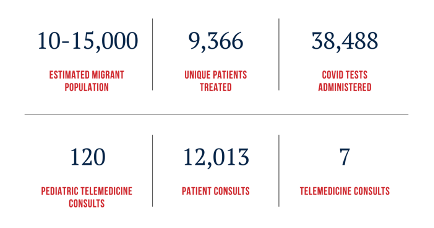
There are currently around 10,000 people on the streets of Reynosa, Tamaulipas, in northern Mexico. Although, without an official population count, we estimate that there could be as many as 15,000. Global Response (GRM) provides medical care to the population living on the streets in Reynosa’s shelters including:
Campamento Rio (~500 people), Senda de Vida I (~1700),
Senda de Vida II (~1500),
Casa Migrante (~200), and Casa de Clinica (~50).

We have tested over 30,000 people this year for COVID-19. Positive COVID results are now extremely rare.

GRM medical providers have seen almost 10,000 unique patients in Reynosa this year (in over 12,000 consultations), 1,300 of whom were seen in October. Typically, complaints are a direct result of the inhumane living conditions: skin conditions, gastrointestinal disorders, and a significant percent of maternal health cases.

Telemedicine consults are available for specialty cases and insecure locations:

  • Since the end of March 2022, we have provided over 120 pediatric telemedicine consults in conjunction with University of California San Francisco (UCSF) to residents of the Kaleo shelter in Reynosa, which our team does not physically visit as it is located to the west of the city in an area that we consider unsafe to travel.
  • We have also provided telemedicine consults to Russian patients – where we were unable to find a local translator – through a partnership with Massachusetts General Hospital. Through these consults, our team has diagnosed conditions such as anxiety, depression, and PTSD.


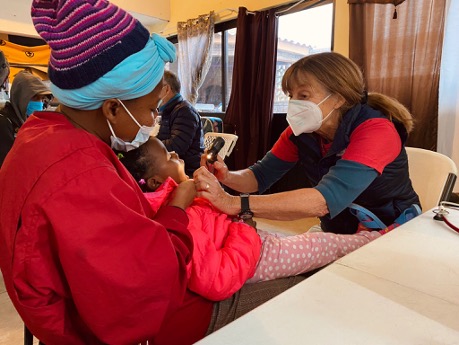
17 November 2022, Reynosa, Tamaulipas, GRM Volunteer, Jane Cross, pediatrician, treats a 2-year-old girl from Haiti, complaining of abdominal pain. Photo credit: Jade Bachtold

On average, we receive around one emergency call per day. The cases, varying in their urgency, have involved respiratory distress, trauma cases, maternal health complications, and emergent medical conditions such as heart attacks, strokes, and appendicitis.

Recent complicated cases have involved a young boy with Tuberculosis, a husband who was diagnosed with terminal cancer while his wife was in a maternal health consult with one of our physicians, and two patients with leprosy. When appropriate resources are not available in Mexico we attempt to place patients in hospitals in the US via humanitarian parole, although unfortunately not all patients survive the wait.

Changes in Citizenship as a Reflection of World Politics:

We have noticed that the town’s population reflects global events. On 21 September 2022, Russian President Putin introduced his conscription decree. A few weeks later, the migrant population in Reynosa saw Russians, Uzbecs,

and Chechens arriving in small groups with several stating ‘avoiding conscription’ as their reason for travel.

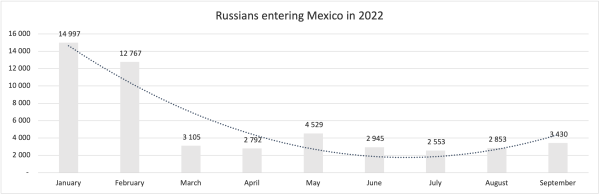
The following graph, based on Mexican Government statistics, shows the numbers of Russians entering Mexico in 2022. While the numbers are lower than the beginning of the year, they are trending slightly upwards, which tracks with what we are seeing in Reynosa. It is worth noting that Russian citizens do not currently need a visa to enter Mexico – they can apply online for an electronic travel authorization, making it relatively easy to enter the country.

Data from the Mexican Institute for Migration 2022:

[1]

The number of Russians encountered by Customs and Border Protection was also higher in September – the most recent data – than any month since May 2022. In October, there were fewer Venezuelans encountered at the southwest border but “encounters of Cuban and Nicaraguan asylum seekers fleeing their authoritarian regimes continue to be at an historic high. This reflects the challenge that is gripping the hemisphere, as displaced populations flee authoritarianism, corruption, violence, and poverty”, said CBP Acting Commissioner Troy Miller.[2]

Whatever happens in the world, it tends to follow that there are changes to the migrant population in Northern Mexico. With the disruption in Haiti, our clinic population saw a significant increase in Haitians in February and May of this year, following an increase in Haitians entering Mexico at the end of 2021. We saw a sharp increase in the number of Guatemalans after the twin hurricanes in 2020 and Afghan families after the 2021 pull out of US troops. At the start of the war in Ukraine in 2022, our Mexico clinics treated Ukrainian patients whilst GRM had another team in Ukraine doing the same.

That said, in spite of the increased number of Venezuelans entering Mexico, Venezuelans are underrepresented in the migrant population in Reynosa; we have seen fewer than 10 Venezuelan patients this year.

See here for a breakdown of our clinic’s population by month and by nationality.

Additional Background to Reynosa:

Reynosa accommodation is offered on a “conveyor belt system”. New arrivals have nothing as the shelters are full, eventually they may be given a tent by those moving into a shelter space and from the shelters they may be put on a list to assess whether or not they can cross to the United States.

By way of background, many people found themselves trapped on the border after the Trump administration implemented migration policies that aimed to prevent people entering the United States. The Biden Administration entered the White House vowing to end both of these policies although to date they

remain in place with a recent court decision requiring the US Government to terminate Title 42 within the next few weeks.[3]

Note that the US Government considers Tamaulipas to be so dangerous that it has issued a stage 4 – do not travel – advisory.

[1] http://portales.segob.gob.mx/work/models/PoliticaMigratoria/CEM/Estadisticas/Boletin es_Estadisticos/2022/Boletin_2022.pdf
[2] https://www.cbp.gov/newsroom/national-media-release/cbp-releases-october-2022- monthly-operational-update
[3] https://www.aclu.org/press-releases/federal-court-strikes-down-title-42-major-victory- asylum-seekers

Please get in touch if you would like to arrange a visit, schedule an interview with one of our staff or patients, visit the shelters in Reynosa, or procure images from the clinics.

For further information please contact:
[email protected]

Download PDF

In The News

CNN – Keeping Title 42 in place won’t slow US-Mexico border crossings, officials say

by Priscilla Alvarez
Original posted on CNN, May 24, 2022

court ruling blocking the termination of a Trump-era pandemic restriction at the US-Mexico border is unlikely to slow border crossings, Biden administration officials say, as migration in the Western hemisphere reaches new highs.

Since taking office, President Joe Biden has faced mounting pressure over his handling of the US-Mexico border, dividing members of his own party following a decision by the US Centers for Disease Control and Prevention to lift Title 42, which allows authorities to swiftly turn people away at the border, effectively barring migrants from seeking asylum.

Republicans hammered the administration for not being tough enough on the border. Some Democrats and immigrant advocates, meanwhile, say the White House has waited too long to rescind it. Regardless, a federal court ruling means the administration will be forced to keep it in effect for now.

Along the northern border of Mexico, advocates say some migrants remain undeterred and desperate. “I don’t think that just because Title 42 didn’t go away today that people are thinking that was the one and only way they were going to get over,” said Sam Bishop, Mexico country director for Global Response Management.

“To me, the lack of some sort of visible and major outcry today in particular or since Friday, is kind of an indication that this isn’t the only thing they’re necessarily waiting for,” Bishop, who works directly with migrants, added.

Over the weekend, following the court ruling, Border Patrol agents arrested more than 500 migrants in the Rio Grande Valley sector alone, which covers south Texas, according to US Customs and Border Protection. And in Yuma, Arizona, border agents arrested over 1,500 migrants in a 24-hour period over the weekend, a Homeland Security official told CNN.

Migration is at new highs amid deteriorating conditions in Latin America that were exacerbated by the coronavirus pandemic. At the US southern border, about 40% of border crossers are now from countries outside of Mexico and the Northern Triangle countries of Guatemala, Honduras and El Salvador, according to a Homeland Security official.

The Department of Homeland Security, officials say, is operating under the belief that numbers will remain high even with Covid-19 border restrictions still in place. The number of border crossings generally increase in the spring, but the current pace of record numbers highlights the continued urgency on the US-Mexico border.

For months, DHS prepared for the future lifting of Title 42, which was invoked at the onset of the coronavirus pandemic, while grappling with around 7,000 border crossers daily.

In a statement following Friday’s ruling, DHS maintained the department would press forward with preparations to manage a potential increase of migrants at the border. Officials are also racing to strike agreements with countries in the region to stem the flow of migrants journeying to the US southern border.

DHS is similarly working with Mexico to mitigate traffic along key areas on the US southern border, like patrols, checkpoints, and going after smugglers, the agency official said.

More than 6 million Venezuelan refugees and migrants have fled the country, according to DHS. Nicaraguans have also increasingly been migrating, as well as Haitians who had moved to the region years ago. Arrangements on migration management have already been struck with Costa Rica and Panama – two countries that migrants pass through when heading to the US southern border.

In the interim, though, a range of nationalities continue to journey to the US southern border. Some of those pose a challenge to the Biden administration because they can’t easily be expelled under Title 42 or deported – at times, fueling more migrants from those regions.

Cubans, for example, are more difficult to expel given poor US-Cuba relations. Between last October and April, border authorities stopped nearly 114,000 Cubans along the US-Mexico border, far outpacing recent years, CBP data shows.

“What US enforcement policy tends to do over the long term is shape who comes, rather than how many people come,” said Andrew Selee, president of the Migration Policy Institute, a nonpartisan think tank. “Title 42 matters on shaping who comes, but it may not be the biggest factor in how many people come.”

Still, Republicans and vulnerable Democrats urged the Biden administration to keep Title 42 in effect, arguing it was a necessary tool until a comprehensive plan to manage the border was in place.

Friday’s ruling, which found the administration should’ve gone through the months-long rulemaking process before terminating the authority, means Title 42 will likely stay in place for months to come.

“We’ll continue seeing the bottle neck on the Mexican side of the border and it really doesn’t resolve much,” Tucson, Arizona, Mayor Regina Romero told CNN, when asked about Friday’s ruling. “I’ve said over and over again that Title 42 is not an immigration tool. It is a public health order.”